





 I want to donate
Who Cares About HIV?
- authise authise
- New Releases
- 8 Apr 2019
-
34views
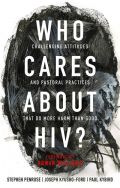
This is a book about pastoral care. About who cares and how we care. It is the story of a struggle to find the right way.
It is not just a book to educate readers or the churches about HIV although of course it does that. Its purpose is also to point out the harm that can be done by people offering pastoral care – in this case those living with HIV – but it equally applies to others such as those living with depression or mental health or so many other issues. The book challenges people in pastoral care roles to think about their practices and to question themselves about the harm they may have caused others and where there is harm, to change. There are no short cuts to this, they have to wrestle with the problem and we hope that the book will help them to do that.
It is not an easy book. It is unconventional because it is not a carefully manicured text neatly prescribing methods by which faith communities and others reach out to those asking them for help, or perceived to be in need. It is instead a set of testimonies of a pilgrimage undertaken by the London HIV Chaplaincy over the last 10 years. The testimony form has been retained so as not to domesticate the passion of the Chaplain’s voice despite the risks of providing a more challenging read. Testimony is the best, perhaps the only way genuinely to hear Joseph Kyusho-Ford’s voice, because in its rough-hewn state testimony expresses the passion (in every sense of the word – love, pain, cost, compassion) of his pilgrimage with those suffering with HIV who have reached out to faith communities and been rejected or humiliated by them before finding help with him.
The book falls into two parts. In the first, Joseph reflects on stories of clients he has encountered in his 10 years at the Chaplaincy. He analyses their search to make sense of their lives as they engage with faith communities. He describes their experience of being on the receiving end of what has passed as pastoral care. In the second part of the book, we hear Joseph’s distinctive voice as he offers what Rowan Williams describes as “a set of intensely focused and coherent theological insights” arising from his and his client’s experiences.
Those experiences are encapsulated in the cry: “if God does not love me as I am, God does not love me!” From that starting point, Joseph challenges those offering pastoral care to a process of ‘attunement’. In fact this book might well be subtitled ‘Attuned to Care’ in order to help the reader understand that it is not solely about HIV, but about how we care. In a fascinating section of conversation Joseph identifies attunement as the key process to which his work and life has led. It is the quality to be sought by those who would truly reach out to care for others. It expresses a sacrificial way to enter into another’s world and engage with them at a level of understanding, respect and humility that can genuinely meet and learn from them. Attunement is the way in which clients have been heard, understood and welcomed. Explicitly and implicitly we find in his words the call to attunement and we are left in no doubt about its cost. Attunement is the call to leave stereotypes, walk away from unexamined moral values, the myths that are harboured still about HIV even though they have been disproved and discredited, a call to walk away from unexamined banalities, and truly to listen, understand and engage pastorally.
We are left in no doubt as to the rigour of this process when in that same conversation Joseph spells out the complexity of the means clients use to express themselves. He identifies how they ask faith communities very direct questions about sexuality and gender with sincerity and openness and a desire for answers that makes sense. The questions are expressed with very strong emotions as they search for a ‘dialogue of equals’. There are inevitable struggles to express their experience in terms with which faith communities can engage. Women find it easier, because within Hebrew and Christian tradition, strong, marginal women are remembered. For men such liminal figures hardly appear in mainstream traditions of faith. So, the clients find themselves profoundly isolated – they are at once people of intense faith and at the same time distanced by the refusal of communities and pastors to allow them ‘to express the issues that power their search for meaning’. In consequence, their lives are those of ‘rebels’ – messy in ways that elicit moralising and judgementalism from others. Their committed search for meaning has led them to different responses and answers to the problems of life and in that journey, they have become ‘aware all too well of the uses and abuses of religion’. It is tragic that clients who have had to amass a vast array of skills in order to negotiate the difficulty of their lives and faith journeys are not granted a hearing amongst so many of those offering pastoral care. This book seeks to gain a hearing for those voices.
There are deep lessons to be learnt here. But they will not come to the reader easily. They need to be quarried from the depths of testimony. The determined, faithful reader, who is able to hear the crying out of a distinctive prophetic voice that criticises, challenges, shocks and repeats hard-won lessons, and still persist to the end with the reading and listening will be rewarded with profound insight into the nature of caring and its cost.
We dare not turn away for the challenges of this short book. While the pilgrimage of care begins with HIV, the lessons do not end there. They are applicable to many other areas of need. The consequences of pastoral mistakes that have been exposed need to be recognised. As Rowan Williams writes in the Foreword, “the challenge posed by the experience of those living with HIV is, not just a problem with abusive, reactionary fundamentalists; it is to do with self-consciously sensitive and would be compassionate people too, whose reactions may be as abusive in effect as many more obvious instances”.
Joseph and those of us who have accompanied him even for a little while in his sacrificial service are filled with admiration mixed with awe at the achievements reflected in this book of caring for and bringing to our attention the needs, pain and achievements of his more than 300 clients over 10 years from the widest range of ages, backgrounds and cultures. The clients are those who Joseph champions and whose search for help, understanding and purpose in life’s journey, has met rejection, judgement, moralising and humiliation at the hands of faith groups that profess to offer compassion and hope. Their stories and Joseph’s searing reflections on them call us to the deepest, most honest, engagement with the real nature of the pastoral care that is at the heart of the church’s calling. The questions echoes: ‘Who cares?’
Related Posts

Categories
Recent Posts
Support SPCK with your donation
Either donate with a one-off donation or subscribe monthly.
Choose a type of donation
I want to donate
 I want to donate